The Back-To-Office Paradox
To get any benefit from being in an office, we needed lots of people to be there for lots of time. Without that, I'm not sure there's a point.

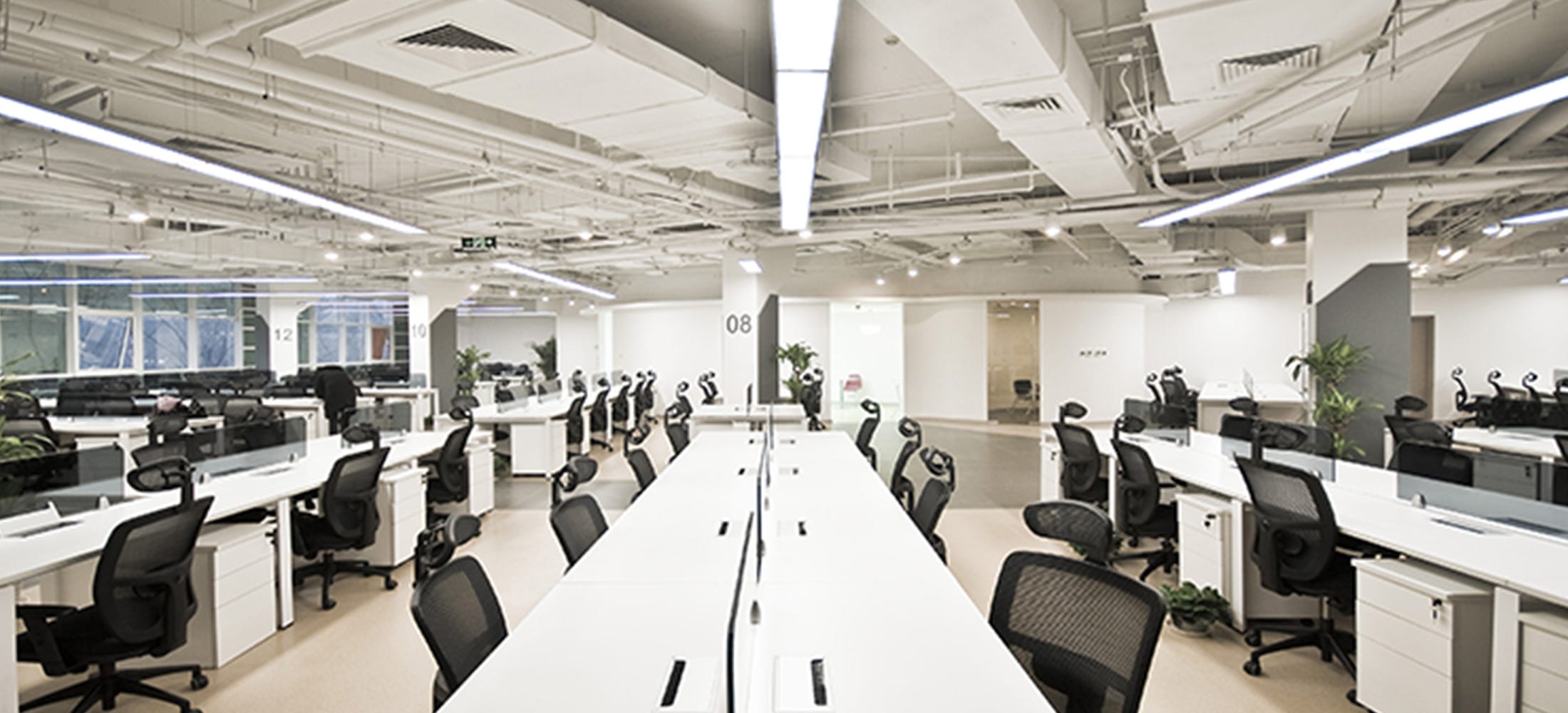
Overnight, we became a two-tiered society of rich people who had the luxury of staying home, served by poor people who didn’t. The posts started popping up on social media about 40 seconds into lockdown. “The workplace has PERMANENTLY CHANGED,” brayed the working-from-home class, with a stridence that suggested they were struggling to convince themselves. “We will NEVER go back to the office.”
Some of these people may have had jobs that truly didn’t benefit from sharing physical space with coworkers. But, as I came to learn over two years, my job did. Yes, there are obvious advantages to perma-WFH. The drawbacks took a little longer to make themselves known.
There is now no such thing as an unplanned, casual interaction. Your conversations are scheduled like showtimes, and you’re playing the role of a face in a Zoom window, that digital proscenium arch, so get ready to perform. If you want to ask a question, the default option is Slack, which can feel like hiring a plane to skywrite “Hey there! I’m so sorry, but can you please remind me something?” followed by the facepalm emoji. And don’t get me started on email. I’ve vowed to get to Inbox Zero, but at this point I’d be happy to get to Inbox Triple Digits.
Nobody wants to be shackled to a cubicle for 40+ hours a week. That includes me. In the previous era, I had a desk that was all mine, but I wouldn’t stay there all day. I hung out on the plush lobby sofas, and snuck glances at people coming in for job interviews. I slipped out to nearby coffee shops. I snagged wi-fi in the park. In a way, I was a small-scale version of a “digital nomad” before it was cool.
But my central oasis, where I’d begin, end, and punctuate the day, was always there. The office wasn’t a cage — it was a shared home base. I got lunch with coworkers. We congregated for HQ Trivia (remember that?) and choreographed elaborate dances as the countdown to the game began. If someone wanted to ask a work-related question, they could do it between bites of a sandwich. I’m lucky enough to have made a career out of “thinking up ideas,” and ideas love to appear when you don’t expect them. Every single interaction you have with another person can inspire one. Maybe something the Project Manager says while you’re illicitly playing Smash Bros. together on a Switch in Conference Room 4 will trigger the next million-dollar campaign concept.
I’ve been excited to see that now, in mid-2022, employers are finally leading a slow, tentative march back into the cubicles and conference rooms. My own agency just closed its big pre-Covid office in favor of a new, much smaller location in a corner of a coworking space. I spent most of last week there. The new place has about 15 desks for whoever feels like using them that day, a kitchen, two small conference rooms, and a private office occupied by HR. (Hey, I’d take that office if I were them, too.) The rest of the building is other companies’ offices, and a vast, shared common space. The industrial-chic halls are drenched in daylight. Drip coffee is free and fancy coffee is cheap. There are dogs. When you walk in the door, you feel life, hubbub, and positive energy. I loved being there.
So it breaks my heart to say, I don’t think this is it.
The point of having an office isn’t that we want to stimulate the real estate market. The point is to get a bunch of people in one place. It was the interstitial moments with other humans, between meetings or tasks on a checklist, when a shared workspace demonstrated its greatest value. But now, the office is seen as a place to get in for part of the day once a month, do some work less efficiently than you could have if you’d stayed home, say hi to five people, and leave. There are no interstitial moments. It’s all “stitial.” Going in is an event. I like that event, and I wouldn’t abandon it just because it isn’t exactly the same as before. But I think what was before was better. And as I witness this hesitant tiptoe back into the office, and C-suite denizens across the nation giving each other sidelong glances as if to say “Am I doing this right?!?!?” I can’t help but fear that the WFH class was right. “The workplace has PERMANENTLY CHANGED.”
I’ve thought a lot about what would be necessary to get back to what I liked about not just work, but coming to work. Here it is. Sorry, C-suite. You won’t like it. But I would also say you shouldn’t do it. Not before somebody else goes first.
Enough space. Last week was the first week my company’s new space was open, so it generated some excitement among my colleagues. I was particularly looking forward to Thursday, when a large crew from across departments was planning to be there. One problem: 25 people is now “too many people.” We ran out of desks in the dedicated space, and some of the folks I’d been most excited to see were advised to stay home because there wasn’t room for them. Instead, they were told to come Friday, which would be “wide open.” What’s the value of sitting alone in a “wide open” office?
A cube of one’s own. People have had two full years to build out sophisticated home workspaces with every accoutrement their hearts desired. Now that employers are inviting people back to the office, you get an external monitor to plug your laptop into, if you’re lucky. Maybe a keyboard and a mouse, encrusted with other people’s crumbs. Remember to bring your laptop charger! If you’re editing video and need beefier hardware than whatever you could carry in, you’re SOL. Forget about leaving a family photo on the desk or a hoodie on the back of the chair — someone else will be here tomorrow. Going to work is now like camping. Pack in, pack out. Take only memories, leave only footprints. It’s an entirely new hassle on top of all the ones that already came with commuting.
Attendance mandates (which aren’t feasible right now). Nobody has to come in, so if I want anyone to join me, I have to be the in-office cheerleader, luring folks from the comfort of their homes with… what, exactly? The pleasure of my company? In the two years of working from home, people developed new routines. Some of them had kids, or took on childcare responsibilities for their existing ones. They’ve settled into life this way. I like to think I’m persuasive, but I’m not paying for other people’s daycare. The best I can do is get about three people showing up once a month, which makes it not really worth it for anybody. And if we were to require in-office attendance, people could simply get jobs with other agencies that let them stay home. I would never recommend an attendance mandate before all your competitors are already doing it. (Read that again: don’t be the first business in your industry to issue an attendance mandate.)
One thing I agree with the WFH class about is that we don’t need five full days every week in the office. Four, three, maybe even two would be fine, as long as everybody comes in at the same time. Once you get down to a day a week (or less), it doesn’t really feel like “going to the office.” It’s a special occasion. I love special occasions. But what I used to know as “normal” still seems very far away.